We Help With
Chronic Skin Conditions
We focus on chronic skin conditions — looking for the root cause, not just suppressing the symptom.
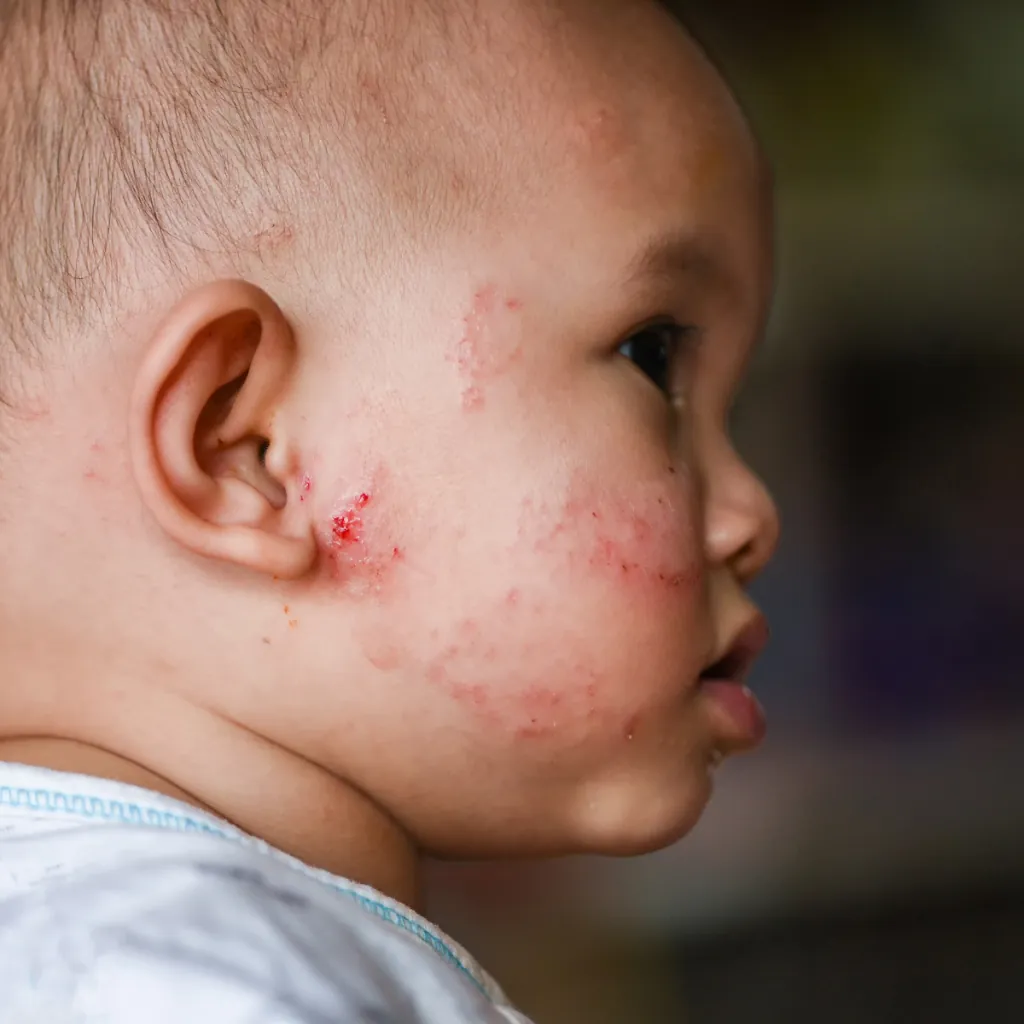
Eczema is a signal — not just a skin condition.
The itch-scratch cycle is exhausting, and many people find that creams alone don't stop flares coming back. We look at what may be triggering the inflammatory response at its source.
Root Causes We Investigate
- Food sensitivities and gut health
- Microbiome imbalances
- Allergies (dust mite, pollen, pets)
- Skin barrier dysfunction
- Environmental irritants and triggers
- Stress and poor sleep
Our Approach to Eczema
Through careful trigger tracking, gut health support and targeted nutrition, we work with you to identify and reduce your triggers while supporting the skin barrier — without unnecessary restrictive diets, and alongside any treatment your GP or dermatologist prescribes.
Book a Free Discovery CallUnderstand what keeps your eczema flaring — triggers, skin barrier, gut, stress and sleep — and build a plan around you.
Why eczema keeps coming back
Eczema (atopic dermatitis) is more than dry skin. It involves a weakened skin barrier, an over-reactive immune response and an itch that feeds on itself: the more you scratch, the more inflamed and itchy the skin becomes. Creams can calm a flare, but many people find the cycle returns again and again.
That is why we start with a different question: what is making your skin react in the first place?
Common factors we look at
- Everyday irritants — soaps, fragrances, detergents, wool, heat and sweat
- Environmental triggers — dust mites, pollen, pets, dry air-conditioning, seasonal changes
- Stress and sleep — both can make itch and flares worse, and poor sleep often follows night-time itch
- Diet and digestion — for some people, particular foods or digestive issues seem linked to flares; we look for patterns carefully, without unnecessary restrictive diets
- Skin care habits — bathing, moisturising and products that support rather than strip the skin barrier
Everyone’s pattern is different. Tracking your flares is often the first step. Our free guide, Good Bye Eczema, walks you through where to start.
How a program works
- Discovery call (free, 15 minutes) — tell us about your skin and see if we are a good fit.
- Initial consultation (60 minutes) — a full history of your skin, health, lifestyle and triggers.
- Your written plan — practical nutrition, lifestyle, skin care and remedy recommendations.
- Follow-ups over 12 weeks — we track what changes and adjust the plan as your skin responds.
When to see your doctor
See your GP promptly if your skin is weeping, crusted, very painful, spreading quickly, or if you feel unwell — these can be signs of infection. Natural approaches can sit alongside medical treatment, but should never delay it.
Common Questions